Here is an overview of the basic SMT (Surface Mount Technology) assembly line process:1. Incoming Material Inspection
Purpose: Ensure the quality of raw materials, including PCB substrates, solder paste, and electronic components.
Operation: Use high-precision instruments to check parameters such as dimensions, oxidation levels, and lead flatness. For example, X-ray inspection equipment is used to analyze the solder ball quality of BGA-packaged chips.
2. PCB Loading
Purpose: Feed the PCBs into the production line.
Operation: An automatic loader neatly places the PCB boards onto the conveyor, ensuring they are flat and undamaged.
3. Solder Paste Printing
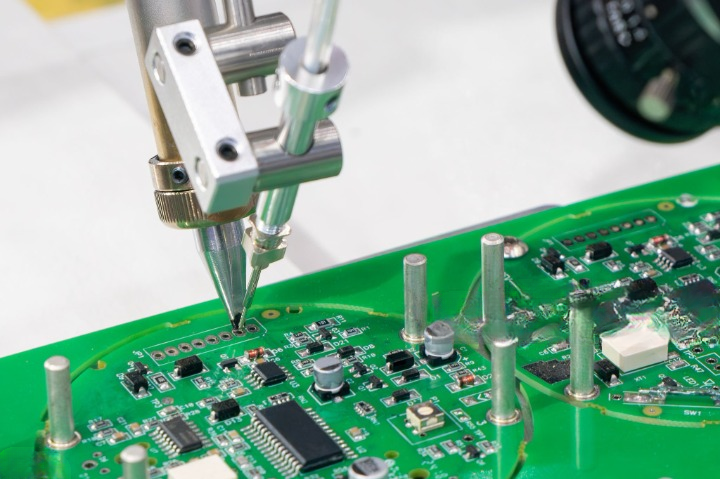
Purpose: Apply solder paste evenly onto the PCB pads.
Operation: A fully automatic solder paste printer transfers solder paste through a stencil onto the pads. The stencil aperture accuracy reaches ±0.01mm, and solder paste thickness is monitored in real time by laser sensors.
4. Pick & Place
Purpose: Accurately place electronic components on the designated positions of the PCB.
Operation: A high-speed pick-and-place machine places tiny components at rates of tens of thousands per minute, with placement accuracy up to ±25μm.
5. Reflow Soldering
Purpose: Heat the solder paste to melt it and form reliable solder joints between components and the PCB.
Operation: The assembled PCBs pass through a reflow oven with four temperature zones: preheat, soak, reflow, and cooling. The temperature profile must be precisely controlled—for example, lead-free processes typically peak at ~245°C, with a duration under 10 seconds.
6. AOI Inspection
Purpose: Detect defects after soldering.
Operation: An Automatic Optical Inspection (AOI) machine scans the soldered boards to identify issues such as tombstoning, misalignment, or cold joints.
7. Rework/Repair
Purpose: Fix soldering defects or quality issues found during inspection.
Operation: Rework stations repair defective boards to ensure final product quality.
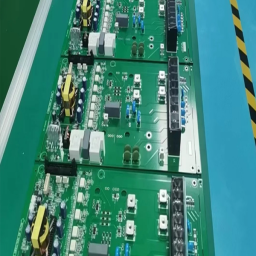
8. Cleaning
Purpose: Remove soldering residues and contaminants from the PCB.
Operation: A cleaning machine with appropriate cleaning solutions and processes is used to avoid damaging the product.
9. Functional Testing
Purpose: Verify that the product functions and performs as required.
Operation: Functional testers and other instruments ensure the PCBs meet design specifications.
10. Packaging
Purpose: Protect the products and facilitate usage.
Operation: Qualified PCBs are packed in reels, trays, tubes, or bags according to customer requirements.
11. PCB Unloading
Purpose: Collect finished PCBs from the production line.
Operation: An automatic unloader neatly transfers the boards into boxes for further packaging and shipment.
#Automation #ElectricalAutomation #IndustrialAutomation #Manufacturing #SMT #SPI #PCB #PCBFactory #PCBA #Assembly