To get flawless solder junctions, the right process must be followed.
1 Preparation and Cleaning
Make that the component leads and PCB pads are oxidation-free and clean. Use isopropyl alcohol or a specialized PCB cleaner to clean if required. Examine every tool and the workspace, making sure it is neat and well-ventilated.

2 Component Preparation and Insertion
To get rid of any oxidation, fresh component leads can be gently bent or abraded with fine-grit sandpaper. Make that the component body is at the proper height or sits flush against the board when you insert the component leads through the corresponding holes on the PCB. Before going on to taller parts like capacitors and IC sockets, start with lesser ones like resistors and diodes.
3 Preheating
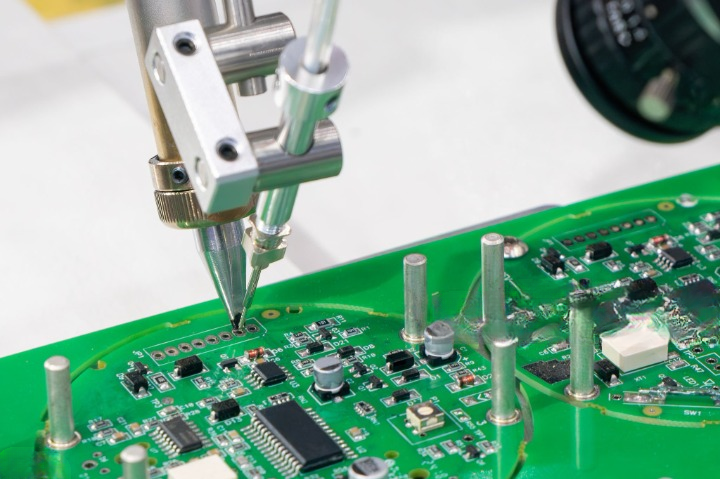
After preheating for one to two seconds, touch the clean soldering iron tip to the component lead and the PCB pad at the same time. Reaching the solder melting temperature is the aim for both the pad and the lead.
4 Applying Solder and Joint Formation
Apply solder wire to the point where pad and lead meet opposite of the iron tip–not directly on it–where they meet, away from where you intend to touch iron tip itself. As it warms, solder will start melting under heat pressure and flow to cover entire joint surface area. Once sufficient solder has formed a smooth concave fillet quickly remove solder wire then iron tip. Usually this should take no more than 2 to 4 seconds in total.

5 Cooling and Inspection
To allow the joint to cool naturally, allow it to settle without moving components or blowing on it – such actions could create grainy, dull “cold joint” structures that should not exist. After cooling has taken place, inspect its quality by looking for signs that it has hardened into an ideal solder joint: its solder should cover its pad evenly while creating wetting angles with lead that form great wetting angles between lead and pad.
6 Cleaning and Trimming
To maintain long-term corrosion or electrical leakage protection, diagonal cutters should be used to trim off excess leads close to the solder joint and any residual flux using isopropyl alcohol and a stiff brush. Finally, any excess flux should be cleaned away with isopropyl alcohol using diagonal cuts for final cleanup.